
The Silent Guardians How Modern Sensors Prevent Falls in Elderly Homes
An exploration of unobtrusive technology monitoring movement patterns to alert caregivers before accidents occur
Every eleven seconds, an older adult arrives at an emergency room due to a fall according to global health data, transforming living rooms into potential hazard zones. This silent epidemic remains the leading cause of injury among seniors aging in place, yet traditional solutions like emergency pendants often go unused during critical moments. Therefore, revolutionary monitoring technologies have emerged as invisible safety nets, weaving protection into domestic environments without demanding behavioral changes from residents. Their discreet nature marks a paradigm shift from reactive alarms to predictive safeguards.
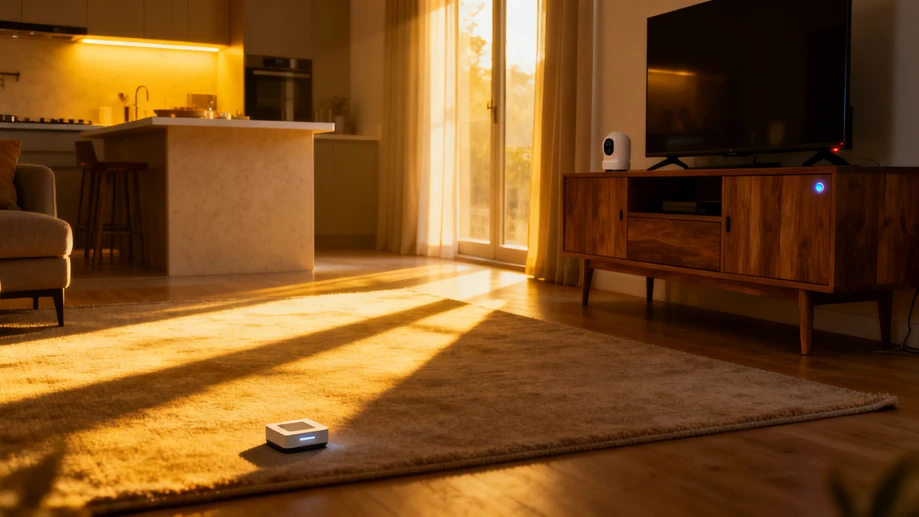
Advanced sensor systems employ sophisticated algorithms interpreting movement signatures through multiple detection methods. Millimeter-wave radar devices discreetly mounted near ceilings track walking speed and stride variations, while pressure-sensitive floor mats beneath rugs detect subtle shifts in weight distribution. These technologies synchronize data through machine learning platforms that establish personalized activity baselines over two weeks. Particularly fascinating are carpet-embedded pressure grid sensors that map footfall patterns across entire rooms without visible wiring. They distinguish between normal movements and stumbles by analyzing impact velocity and body orientation angles within milliseconds.
Such systems generate actionable intelligence rather than raw data streams, triggering alerts only when detecting abnormal sequences. Accelerometers identify sudden drops in elevation combined with horizontal velocity changes to differentiate intentional sitting from uncontrolled falls. Furthermore, environmental sensors monitor contextual factors like light levels and moisture on floors that elevate fall risks. Privacy remains paramount through encrypted local processing that anonymizes movement data, transmitting only coded alerts to designated caregivers’ devices. This layered approach transforms ordinary spaces into responsive environments that anticipate danger.
Practical implementation requires strategic sensor placement along high-risk pathways. Primary monitoring zones include bathroom entrances where slippery surfaces pose threats and bedroom-to-hallway transitions where nighttime disorientation occurs. Systems integrate with existing lighting for automatic illumination upon detecting motion after dark, reducing tripping hazards. Caregivers receive tiered notifications ranging from "unusual inactivity" warnings to critical fall alerts with impact location coordinates. Several affordable systems now self-calibrate to household layouts through automated room mapping during setup.
Maintenance involves surprisingly simple routines like periodic lens cleaning for optical sensors and battery replacements approximately every eighteen months. The technology evolves toward self-diagnostic capabilities that notify families about sensor malfunctions. Crucially, these systems complement rather than replace human caregiving, preserving dignity while providing peace of mind. They represent not cold surveillance but attentive guardianship that honors independence through intelligent protection.