
Simple Home Adjustments Transform Elderly Care and Prevent Accidents
Discover how minor household modifications create safer environments that extend independence for seniors
Every year millions of older adults experience preventable accidents at home that drastically alter their lives. A loose rug becomes a hazard, poor lighting turns a hallway treacherous, and an unsteady step can lead to months of recovery. These incidents often begin subtly yet spiral into life-changing events, stripping away precious independence and triggering unnecessary hospitalizations. What makes these statistics more troubling is how simple solutions exist right within our homes. By reimagining living spaces through the lens of safety, we create environments where dignity thrives and risks diminish.
Understanding the physical changes that accompany aging reveals why homes transform into obstacle courses. Diminished eyesight struggles with low-contrast edges while weaker muscles compromise balance on uneven surfaces. Common household features like high-step showers, slippery floors, or electrical cords suddenly become threats. Even daily routines carry hidden dangers: reaching for items on high shelves may cause dangerous falls, while low toilet seats require challenging transfers. These risks accumulate silently until one misstep becomes catastrophic, yet remain surprisingly addressable through thoughtful adjustments.
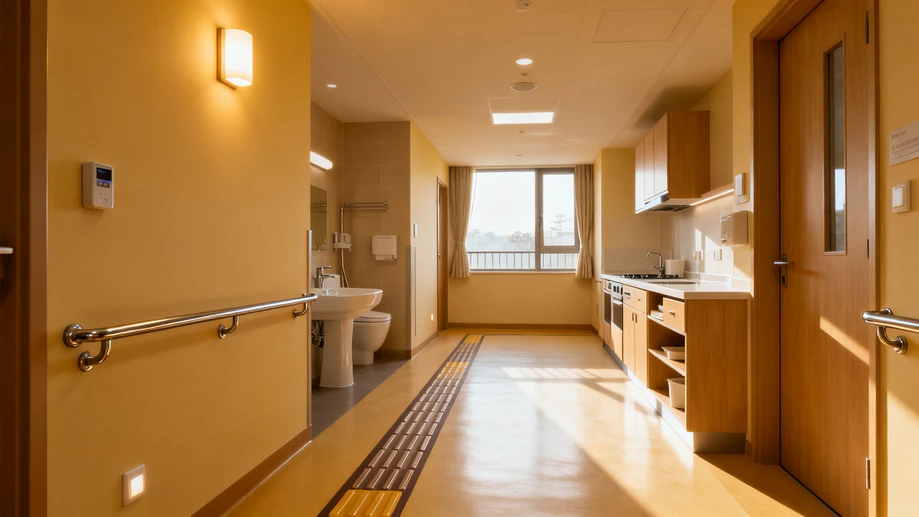
Strategic modifications in key areas significantly reduce accident rates. Bathrooms benefit immensely from non-slip mats and grab bars near toilets and showers, where most falls occur. Install lever-style faucets requiring minimal grip strength and brightly colored tape on step edges for visual clarity. Walkways deserve special attention—remove clutter, secure loose rugs with double-sided tape, and arrange furniture to create clear 36-inch pathways. An often-overlooked innovation involves lowering light switches while raising electrical outlets to eliminate dangerous bending and stretching motions during daily activities.
Lighting systems deserve revolutionary upgrades beyond brighter bulbs. Introduce motion-activated night lights along bedroom-to-bathroom routes and install daylight-mimicking fixtures that reduce glare-related disorientation. A fascinating safety approach borrows from aviation design: contrasting color strips on stair edges create depth perception cues similar to runway markings. This low-cost intervention dramatically improves navigation accuracy as demonstrated in recent environmental studies. Additionally, consider installing voice-activated smart home systems that control lights or emergency alerts through simple commands, reducing physical exertion.
Emerging technologies continue enhancing preventive care through unobtrusive monitoring. Sensor mats near beds track movement patterns while discreet wall units detect unusual inactivity. These systems alert caregivers about potential emergencies without invading privacy, representing the future of dignified support. Beyond physical spaces, effective care includes regular reviews of medication side effects impacting balance and scheduled vision checks. When communities implement these layered approaches, hospitals report staggering reductions in fall-related admissions among participating seniors.
Ultimately, transforming homes into age-friendly sanctuaries reshapes what aging represents. Simple modifications restore confidence and autonomy rather than imposing restrictions. Every grab bar installed means fewer terrifying moments grasping unstable fixtures; each illuminated pathway represents freedom after sunset. This proactive philosophy celebrates independence instead of anticipating decline—a profound shift honoring life experience while practically supporting extended golden years at home where memories reside and comfort prevails.