
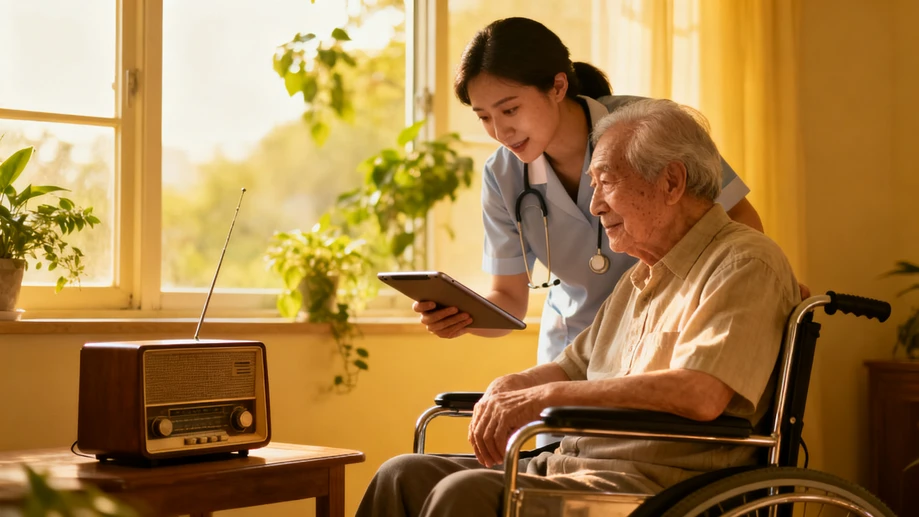
The Healing Harmony How Caregivers Use Music to Uplift Dementia Patients
Discover the surprising ways familiar melodies can rekindle memories and bring joy to those living with cognitive decline
Imagine a quiet room where a caregiver gently hums a tune from the 1940s, and suddenly the eyes of an elderly woman with dementia light up with recognition. This simple yet profound interaction is not magic but a testament to music's remarkable ability to bypass cognitive barriers. For individuals navigating the fog of dementia, familiar songs often remain accessible long after other memories fade, creating rare moments of connection. Caregivers worldwide are discovering that music serves as a key to unlock emotional responses and fleeting clarity, transforming routine care into meaningful exchanges that transcend verbal communication.
Scientific research illuminates why melodies resonate so deeply with dementia patients. Music activates multiple brain regions simultaneously including those governing emotion, memory, and motor control which often remain relatively intact even as language centers deteriorate. Neurologists note that rhythmic patterns can stimulate neural pathways associated with long term memory storage, explaining why patients might recall lyrics from their youth while struggling to recognize family members. The physiological effects are equally compelling studies show that listening to preferred music reduces agitation triggers lowers cortisol levels and can even temporarily improve cognitive function by synchronizing brainwave patterns.
Implementing music therapy doesn't require professional training but thoughtful strategy. Caregivers begin by identifying songs tied to the patient's formative years typically from their late teens to early adulthood when emotional memories are strongest. Personalization is crucial a song that evokes joy for one person might distress another. Simple tools like digital playlists or handheld instruments allow caregivers to create spontaneous sessions whether during meals to stimulate appetite or before bedtime to ease anxiety. The approach emphasizes participation over perfection encouraging clapping swaying or humming rather than demanding precise recall.
One observed phenomenon is the instant transformation during music sessions. A man who rarely speaks might sing every word of a wartime ballad his posture straightening as if transported decades backward. Such moments offer more than fleeting joy they provide caregivers with invaluable insights into the person behind the condition revealing preserved identities and untapped reservoirs of emotion. These musical bridges also reduce reliance on pharmacological interventions for mood management fostering natural calmness that can last hours beyond the final note.
Beyond immediate emotional benefits music cultivates unexpected cognitive sparks. Caregivers report patients initiating conversations about song related memories or demonstrating improved focus during subsequent activities. This cognitive ripple effect suggests that musical engagement might strengthen neural plasticity creating temporary windows for enhanced connection. While not a cure these sessions restore dignity by allowing patients to lead interactions rather than merely receive care.
The true power lies in accessibility any caregiver can harness music's potential with minimal resources. Start with five minute sessions using familiar recordings observe reactions closely and expand gradually. Success manifests not in grand performances but in subtle signs a relaxed sigh a tapping finger or a fleeting smile. In dementia care where communication often feels like shouting across a canyon music becomes a sturdy rope bridge built note by note.