
How Technology Is Reshaping Scheduling Efficiency in Home Care Services
Intelligent systems now optimize caregiver routes and client matching with unprecedented precision.
In the demanding world of home care, time translates directly into quality service. Traditional scheduling often involved administrators wrestling with spreadsheets, juggling caregiver availability, client locations, and fluctuating appointment durations. Manual planning frequently led to inefficiencies – unnecessary travel time between clients, scheduling gaps, or last-minute cancellations causing chaotic reshuffles. These inefficiencies weren't just administrative headaches; they resulted in exhausted caregivers spending excessive hours commuting and, crucially, less time actually providing care. The industry, propelled by increasing demand and a growing focus on client well-being, needed a smarter solution.
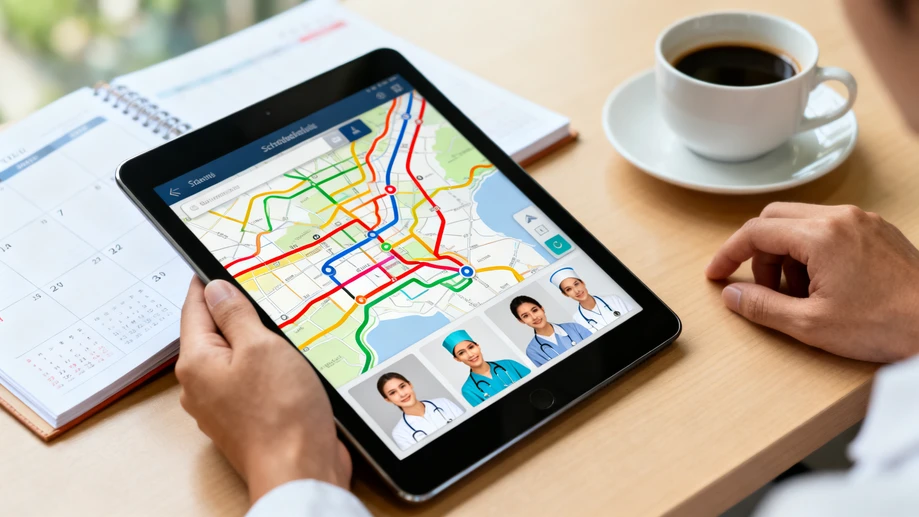
Enter advanced scheduling software. These platforms function as digital conductors for home care agencies. By integrating real-time data streams – GPS tracking of caregivers, detailed client profiles including required skills and appointment types, and historical traffic patterns – intelligent algorithms construct optimized daily routes. They calculate the most efficient sequence of visits, minimizing dead mileage between appointments. The impact is profound. Agencies report reductions in travel time by up to 25%, significantly lowering fuel costs and vehicle wear-and-tear. Caregivers gain back precious minutes, reducing stress and fatigue, which directly enhances their ability to provide attentive, compassionate care during their visits.
Beyond mere logistics, these technologies also enhance matching capabilities. Sophisticated platforms incorporate detailed caregiver skill sets, certifications, experience levels, and even recorded client preferences or communication styles. When scheduling a visit, the system doesn't just assign the next available caregiver; it suggests or automatically assigns the caregiver whose profile best aligns with the specific client's needs and documented preferences. This intelligent matching fosters stronger professional relationships. Consistency of care improves as clients are more likely to see familiar caregivers suited to their situation, leading to higher satisfaction rates and building essential trust – a cornerstone of effective home care.
Moreover, the agility offered during unforeseen disruptions is transformative. When a caregiver calls in sick or encounters unexpected traffic delays, manual rescheduling often resulted in missed visits or significant delays. Modern systems instantly recalculate optimal routes and reassign clients in near real-time. Care coordinators receive instant alerts and can oversee the reshuffling process efficiently, often with minimal disruption to the client's day. Mobile applications further empower caregivers, providing them with dynamic schedules, turn-by-turn navigation, and the ability to update their status immediately if delays occur, keeping everyone informed. This responsive system ensures continuity of care.
The potential extends to predictive analytics. As these systems gather vast amounts of anonymized operational data – travel times per neighborhood, average visit duration for specific care types, common scheduling conflicts – they begin to identify patterns. Agencies can leverage these insights for proactive planning, forecasting staffing needs more accurately, anticipating high-demand periods, and identifying recurring bottlenecks. This data-driven approach enables better resource allocation, reduces operational costs over the long term, and ultimately supports agencies in scaling their services sustainably to meet the surging demand driven by aging populations globally.
While human oversight remains vital, the adoption of intelligent scheduling marks a pivotal shift. It frees administrative staff from repetitive tasks, allowing them to focus on complex client needs, caregiver support, and quality assurance. Caregivers experience less burnout, arriving at appointments less harried and more prepared. Clients benefit from greater reliability, personalized care continuity, and maximized caregiver time focused on their well-being. Technology, in this context, becomes an indispensable tool for elevating the entire home care ecosystem.