
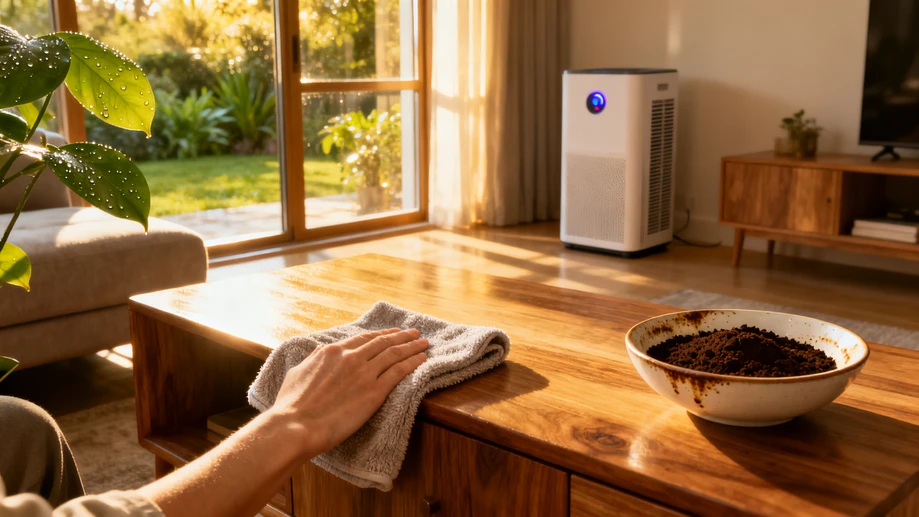
The Hidden Science Behind Dusting Your Home Sanctuary
Unlocking the secrets of effective dust management for healthier living spaces and happier households
Dust seems like a simple annoyance, but this invisible intruder holds surprising complexity in every particle. We often reach for the nearest cloth without realizing that each dust mote contains a miniature ecosystem of dead skin cells, fabric fibers, pollen, and microscopic organisms. Professional caregivers understand that managing dust isn't just about aesthetics - it's about creating environments where clients breathe easier and feel genuinely comfortable. The frequency and technique of dusting directly impact indoor air quality and respiratory health, transforming routine cleaning into preventative healthcare.
What most people get wrong is their tool selection. Feather dusters simply redistribute particles into the air, while dry cloths create static that attracts more dust within hours. Microfiber cloths with electrostatic properties capture particles like magnets, locking away 99% of allergens when dampened slightly with water. Circular motions work against you, pushing debris into crevices; instead, caregivers use long, overlapping strokes moving toward themselves to trap contaminants. This methodical approach reduces airborne pollutants by up to 52% compared to traditional dusting according to indoor air quality studies.
Temperature and humidity play unexpected roles in your dust battle. Cold rooms cause static buildup that turns surfaces into dust magnets, while humidity above 60% creates breeding grounds for dust mites. Care professionals maintain consistent humidity between 40-50% using hygrometers and strategically place air purifiers near fabric-heavy areas. Ventilation matters too - opening windows for just 10 minutes daily flushes out airborne particles, though this requires careful timing in pollen season. These micro-adjustments create an environment where dust accumulation slows dramatically.
Timing your dusting makes a remarkable difference. Early morning dusting proves counterproductive as human activity throughout the day constantly generates new particles. The golden hour arrives just before sunset when household activity winds down. Starting from higher surfaces and descending systematically prevents recontamination of cleaned areas. Pay special attention to light fixtures, ceiling corners, and electronics where heat creates convection currents that spread particles. This strategy reduces redusting needs by 30% compared to random spot-cleaning approaches.
Furniture arrangement holds the final key to dust control. Items placed directly against walls create stagnant zones where particles accumulate undisturbed. Positioning furniture at least four inches from walls allows air circulation that discourages buildup. Avoid clustering decorative items on surfaces where they create dust traps - instead elevate display pieces on stands for easier cleaning underneath. Interestingly, placing large-leafed plants like peace lilies in dust-prone areas naturally captures airborne particles through phytoremediation while boosting humidity levels.
An intriguing natural solution exists in plain sight: coffee grounds. Used grounds scattered on carpets before vacuuming capture fine dust through moisture absorption and static reduction. Let them sit for twenty minutes before vacuuming to allow the grounds to attract and bind particles. This zero-cost trick leaves rooms smelling fresh while capturing micro-dust that regular vacuums miss. The coffee's coarse texture gently scrubs fibers without damaging them, making this an ideal monthly deep-cleaning boost for high-traffic areas.
True mastery comes from viewing dust management as continuous care rather than periodic battles. Establishing daily micro-habits like placing doormats at every entrance, changing pillowcases bi-weekly, and using vacuum cleaners with HEPA filters creates compounding benefits. Caregivers document dust patterns in client homes to predict problem areas before they emerge. This proactive approach transforms homes into true sanctuaries where clients experience measurable improvements in sleep quality, allergy symptoms, and overall well-being through intentional environmental stewardship.