
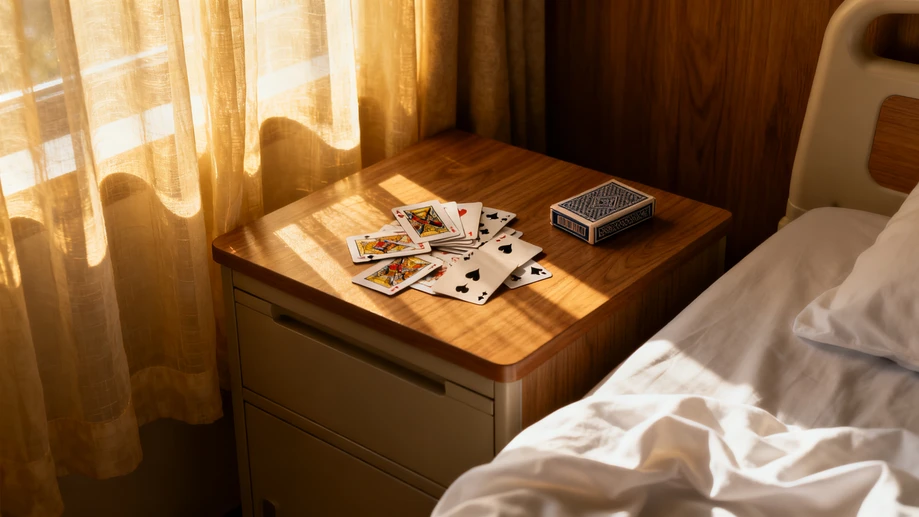
A Deck of Cards and a Smile Transform Caregiving Moments
Discover how simple card games create meaningful connections between caregivers and bedridden patients
In the quiet corners of healthcare, where monotony often reigns for long-term bedridden patients, caregivers wield unexpected tools against isolation. Beyond administering medication and physical support, they combat an invisible adversary: soul-crushing boredom. Days blur into indistinguishable patterns for those confined to beds, where even sunlight feels like a scheduled event. The emotional toll compounds physical ailments, creating cycles of despair that medications cannot touch. Yet within this challenge lies opportunity – for connection, joy, and psychological relief through profoundly simple interventions.
Consider the humble deck of playing cards, an unassuming hero in therapeutic caregiving. When caregivers initiate games like Go Fish or Rummy, they activate multiple cognitive pathways simultaneously. Patients engage memory to recall rules, exercise decision-making to strategize plays, and stimulate fine motor skills while handling cards. More crucially, the shared activity shifts focus from pain to playful competition. A 2021 Journal of Therapeutic Recreation study noted that patients participating in card games reported 40% lower anxiety levels post-session. The rhythmic shuffling and dealing create comforting rituals, while lighthearted banter dissolves clinical formalities.
Transitioning from observation to participation requires thoughtful calibration by caregivers. They assess each patient's energy levels and dexterity – adapting rules for arthritis sufferers or shortening sessions for those with fatigue. One stroke survivor regained partial hand mobility through daily five-minute card exercises, progressing from sliding cards across a tray to holding a fan. Caregivers might incorporate educational twists, using cards to discuss numbers or colors during cognitive therapy. The magic unfolds not in complex rules, but in the patient's dawning smile when they play a winning card.
Beyond cognitive benefits, these interactions rebuild fractured social identities. Bedridden individuals often mourn lost independence and social roles, but card games restore agency through small victories. Choosing when to play, deciding which game to try, or teaching a caregiver a new variation – each act reclaims personal autonomy. Shared laughter during a bluff in Poker becomes medicine, releasing endorphins that outlast the game. Neurologically, such positive interactions reduce cortisol production while stimulating oxytocin, creating biological anchors against depression.
Implementation requires minimal resources but maximal presence. Caregivers position trays at comfortable angles, use large-print cards if needed, and let patients dictate the pace. One innovative technique involves caregivers dealing cards onto a vertical board for patients with limited reach. Success emerges not through structured outcomes, but through moments when a patient's eyes brighten at the question: "Your turn – will you draw or pass?" Such connections become lifelines, proving that human engagement remains the most potent therapy in any caregiving toolkit.