
Playtime Is More Than Fun: How Everyday Games Shape Your Child's Future
Our Shared Games Are Building Essential Skills from Critical Thinking to Emotional Intelligence
We often view playtime as simply a joyful break for children, a period of carefree laughter and kinetic energy. Yet, beneath the surface of building block towers and pretend tea parties lies a complex and vital engine driving your child's cognitive and emotional development. This everyday, seemingly simple act of shared play is far more profound than mere entertainment. It's the fertile ground where seeds of future problem-solving abilities, empathy, and social understanding are sown and nurtured through the natural language of fun.
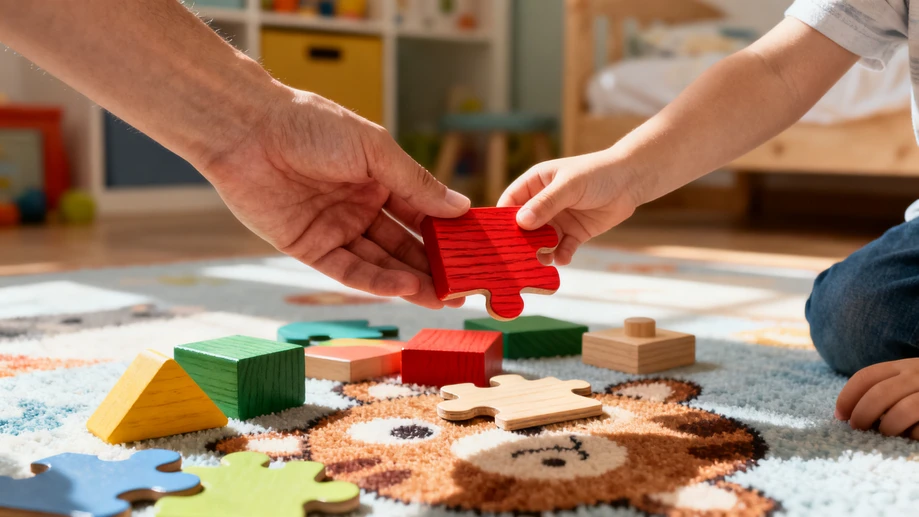
Consider the seemingly mundane activity of sorting colored blocks with a toddler. As you sit together, naming colors, comparing sizes, and discussing which block fits where, you're doing far more than organizing toys. Your child is actively developing foundational cognitive skills. They're learning to categorize objects based on visual attributes, strengthening their working memory by recalling color names, and honing their fine motor skills as they manipulate the pieces. Your guided participation provides the necessary scaffolding for these neural pathways to form, turning a simple game into a powerful brain-building exercise that feels effortless and enjoyable.
Moving beyond structured sorting, imaginative play unlocks a different, equally crucial dimension. When a child transforms a cardboard box into a rocket ship or a stick into a magic wand, they are not just escaping reality. They are actively constructing it, testing boundaries, exploring social roles, and processing complex emotions in a safe, symbolic space. Your willingness to enter this world, to become the co-pilot on the cardboard rocket or the patient receiving the "magic" cure, validates their creativity. It signals that their ideas have value, fostering immense self-confidence. Moreover, navigating the rules and roles within this shared fantasy world provides invaluable practice in understanding perspectives, negotiating conflicts, and developing empathy – skills vital for future relationships. This unstructured playtime isn't chaos; it's a laboratory for social and emotional intelligence.
However, the benefits of playful interaction extend even further into the realm of communication and critical thinking. Board games designed for young children, or even simple games like "I Spy" during a walk, introduce fundamental concepts of rules, turn-taking, and dealing with winning or losing gracefully. They require focused attention, strategic planning (even basic), prediction, and adapting to changing situations. As you narrate your actions ("I wonder if placing the red circle here will make it taller?"), model problem-solving ("Oh no, the tower fell! Maybe we need a wider base?"), and demonstrate patience during their turn, you provide live tutorials in reasoning, resilience, and effective communication. These are the building blocks for analytical thinking and emotional regulation later in life.
Perhaps the most profound, yet intangible, benefit of consistently engaging in play is the deep relational bond it forges. When you get down on the floor, make eye contact at their level, and genuinely invest in their world of play, you send an unmistakable message: "You are important. Your world fascinates me. I am here, fully present, for you." This dedicated, undistracted time is a powerful antidote to the fragmented attention so common in modern life. It builds a reservoir of security and trust. Children feel seen, heard, and profoundly connected. This secure attachment becomes the bedrock of their emotional well-being, giving them the confidence to explore the wider world knowing they have a safe harbor to return to. The shared laughter and playful connection during these moments weave threads of deep affection and understanding that last a lifetime.
In essence, never underestimate the power embedded in a game of peek-a-boo, a shared puzzle, or a wild adventure with stuffed animals. These moments are not diversions from the 'real work' of parenting; they are the very essence of it. By consciously choosing to engage in our children's play, we go far beyond providing amusement. We become active architects of their developing minds and hearts, building the cognitive, social, emotional, and relational foundations they will carry forward into their future. The investment is playful, but the returns are foundational and profound.