
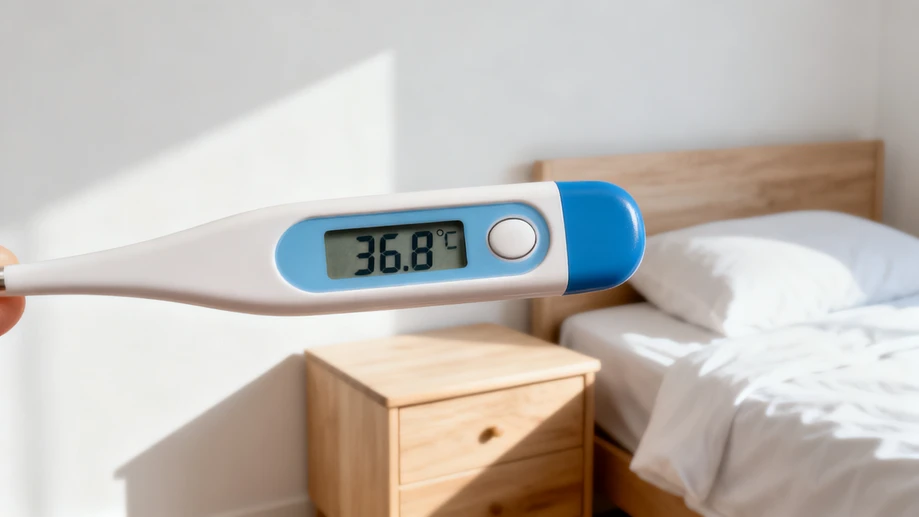
The Art and Science of Accurately Measuring Body Temperature at Home
Discovering why your thermometer might be lying to you and how to get reliable readings every time
Imagine your forehead feels warm, your energy dips unexpectedly, and you reach for that trusty thermometer. But did you know that a simple half-inch shift in positioning could turn your "normal" reading into a "fever" alert? Temperature measurement seems straightforward – press a button, wait for the beep – yet this everyday ritual hides fascinating scientific complexities. Your body isn't a uniformly heated oven; it's a dynamic biological system with temperature variations across different regions. Understanding these thermal landscapes transforms a mundane check into an insightful health diagnostic tool. The ear, mouth, armpit, forehead, and rectum each tell distinct thermal stories, making placement technique the unsung hero of accurate readings.
Consider the temporal artery thermometer gliding across your forehead. Its infrared magic detects heat emitted from blood vessels beneath the skin, but outdoor exposure or sweat can distort its judgment. Alternatively, the humble oral thermometer under the tongue relies on good mouth closure; speaking or breathing during measurement invites cool air that skews results downward. Ear thermometers demand precise alignment with the eardrum's heat radiation, while old-fashioned axillary readings require full skin contact and patience. Rectal measurements remain the gold standard for infants, capturing core body heat most faithfully. Each method serves unique scenarios, yet they share a critical vulnerability: human error easily overpowers technological precision.
Mastering measurement technique proves more valuable than buying expensive gadgets. Before an oral reading, avoid hot or cold drinks for fifteen minutes – that steaming coffee could mask a real fever. Position the tongue thermometer's tip in the sublingual pocket's warmth, not near cooler front teeth. For ear scans, gently pull the earlobe backward to straighten the canal, creating a clear path to the eardrum's true temperature. Forehead devices require swiping from center to temple without lifting, following the arterial path like tracing invisible train tracks. Even digital readouts need verification; double-check unusual results using a different method or repeating after a ten-minute wait. Consistency in time, position, and environment turns random checks into trustworthy data.
Environmental gremlins love sabotaging thermometers. Drafty rooms undercut armpit readings, while heavy blankets during sleep elevate skin temperatures artificially. Post-exercise readings often mislead as muscles generate heat, just as chilly winter walks depress skin readings dramatically. Even your circadian rhythm plays tricks – your body naturally runs cooler at dawn and warmer at dusk. Medication adds another layer: aspirin or ibuprofen intentionally lowers temperatures, potentially masking underlying issues if measured too soon after dosage. Recognizing these variables allows you to contextualize numbers rather than panic at isolated readings. Always compare against your personal baseline when feeling well, not textbook averages.
Interpreting results requires understanding normal fluctuations. For adults, oral readings between 97.7°F (36.5°C) and 99.5°F (37.5°C) cover typical daily variations. Children often run slightly higher, while seniors may read lower. Crucially, fever isn't defined by absolute numbers but by deviation from individual norms coupled with symptoms. A reading of 100.4°F (38°C) might be insignificant for someone whose normal is 99°F (37.2°C), while 99.8°F (37.7°C) could signal trouble for a person who typically registers 97°F (36.1°C). Track patterns over hours – rising trends matter more than single spikes. Combine temperature data with pulse rate, hydration status, and energy levels for clinical context. When in doubt, professional medical advice trumps any thermometer's display.