
Playful Moments Are The Secret to Building Stronger Bonds with Your Child
Discover how simple games and laughter can transform your relationship with your child and foster lasting connections
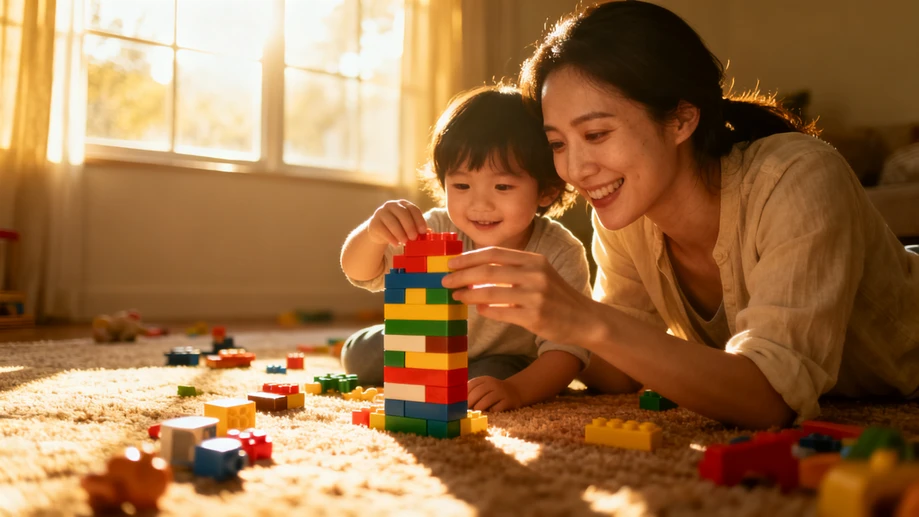
Imagine transforming the familiar afternoon slump into a burst of joyful connection that leaves both you and your child glowing. Many parents overlook a powerful bonding tool hiding in plain sight: unstructured playtime. Those moments of shared laughter during pillow fights or collaborative block-building sessions do far more than pass the time; they weave invisible threads of trust between you. When you roll up your sleeves and enter your child's world of imagination, you demonstrate that their universe matters deeply to you.
Research consistently reveals that play engages children's brains in unique ways that structured activities cannot replicate. Neurologically speaking, games stimulate dopamine release while lowering cortisol levels, creating an optimal environment for emotional connection. This biological dance becomes especially potent during physical play, like chasing games or gentle wrestling, which trigger the release of oxytocin—known as the bonding hormone. These chemical reactions form neural pathways associating your presence with safety and joy, a foundation far stronger than any lecture about good behavior could establish.
Transitioning from theory to practice requires no elaborate setups or expensive toys. The most effective bonding games often involve improvisation with household items. Try creating an "obstacle course" using couch cushions for crawling tunnels and books as stepping stones. Or initiate a "silly walk parade" where each participant must invent increasingly ridiculous ways to cross the living room. What matters isn't the complexity but your full participation—the toddler who witnesses mom walking like a penguin with earnest commitment feels profoundly seen. Such activities naturally build teamwork skills too, as seen when constructing a blanket fort requires negotiating roles and solving structural challenges together.
Interestingly, adults often underestimate how much children value their undivided attention in these playful exchanges. Put away your phone during these sessions; your child notices distracted glances at screens. Rather than correcting every mistake in a pretend tea party, embrace the spilled invisible tea as part of the story you're co-creating. This acceptance teaches emotional regulation more effectively than direct instruction ever could. After a giggle-filled pillow fight, that same child will more readily share their anxieties about school bullies because they associate you with non-judgmental listening.
Remarkably, these playful interactions establish long-term relationship patterns that extend far beyond childhood. Adolescents who grew up with regular, joyful play sessions maintain stronger communication with parents during turbulent teenage years. The laughter shared over board games becomes a relational anchor during conflicts about curfews or homework. Even as adults, they'll carry forward the implicit lesson that relationships thrive through shared joy rather than constant negotiation. This week, replace just one structured activity with spontaneous play and watch how a simple game of "floor is lava" can become the cornerstone of lifelong connection.